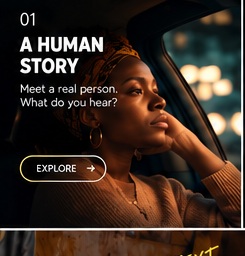
01 • STORYTELLER
My story. My meaning.
Experience what happens when your words are interpreted, then exercise the right to clarify, correct, or reject what someone—or a system—thinks they mean.

Same story. Different interpretations.
Who gets to decide what it means?
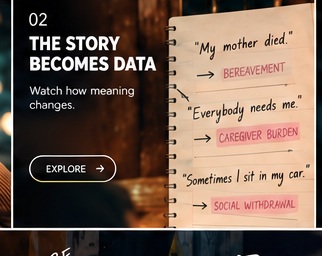
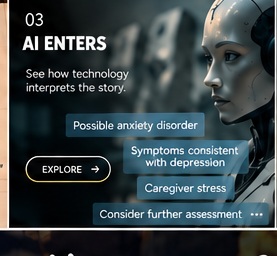
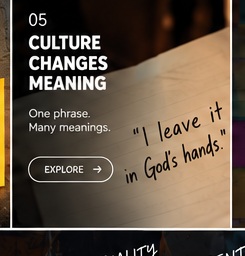
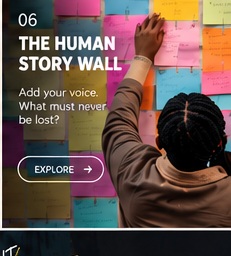

The same human story can look different depending on who is holding it. Explore the lab as a storyteller, clinician, or researcher—without asking any one role to own the meaning.
Experience what happens when your words are interpreted, then exercise the right to clarify, correct, or reject what someone—or a system—thinks they mean.
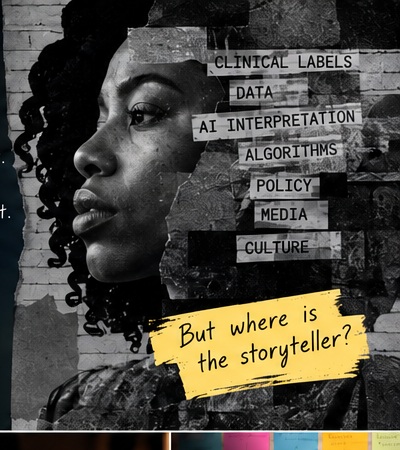
Explore the space between what a patient said, what a professional reasonably inferred, what remains unknown, and what should be clarified before meaning hardens into a record.
Follow a story as it becomes transcript, code, theme and finding. Ask what participant validation could reveal before an interpretation becomes evidence.
This experience is not a demonstration of whether AI is “good” or “bad.” It asks a deeper question: when a human experience is translated by people, institutions, data systems or AI, who retains the authority to say what that experience means?
A developing conceptual lens for examining how the stories people tell, inherit, embody, suppress, contest and reimagine shape psychological experience, identity, belonging and wellbeing within cultural and social contexts.
Who gets to name, frame, interpret, document, translate, circulate—and correct—the meaning of a person's experience?
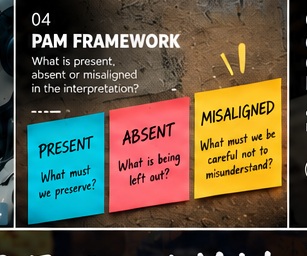
Present. What survived the interpretation?
Absent. What disappeared?
Misaligned. What may have acquired a meaning the storyteller did not intend?
An experimental interface that separates observation from inference, names uncertainty, asks before concluding, accepts correction and returns interpretive authority to the storyteller.
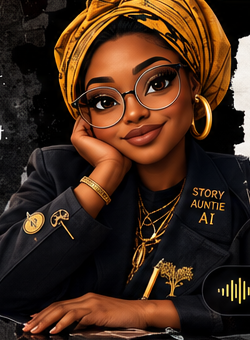
“I can interpret your words. You retain the authority to tell me what they mean.”THE DESIGN RULE BEHIND STORY AUNTIE AI
The workshop is the experience. The scholarship is the foundation. Story Auntie AI makes the argument testable, discussable and designable.
Explore how patient stories change as they move through documentation, screening, care teams and digital systems.
Prototype interfaces that distinguish what a person said from what a model inferred—and make correction a first-class interaction.
Study narrative authority, culturally situated meaning, human correction and the limits of machine interpretation.
Design participatory approaches that preserve lived experience, cultural knowledge and community meaning as stories become evidence.
Clinical language may help us recognize patterns.
Data may help us see across populations.
AI may help us organize information.
Art may help us encounter what cannot easily be measured.
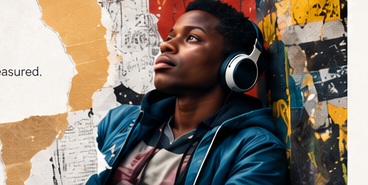
Workshops | Lectures | Training | Consulting
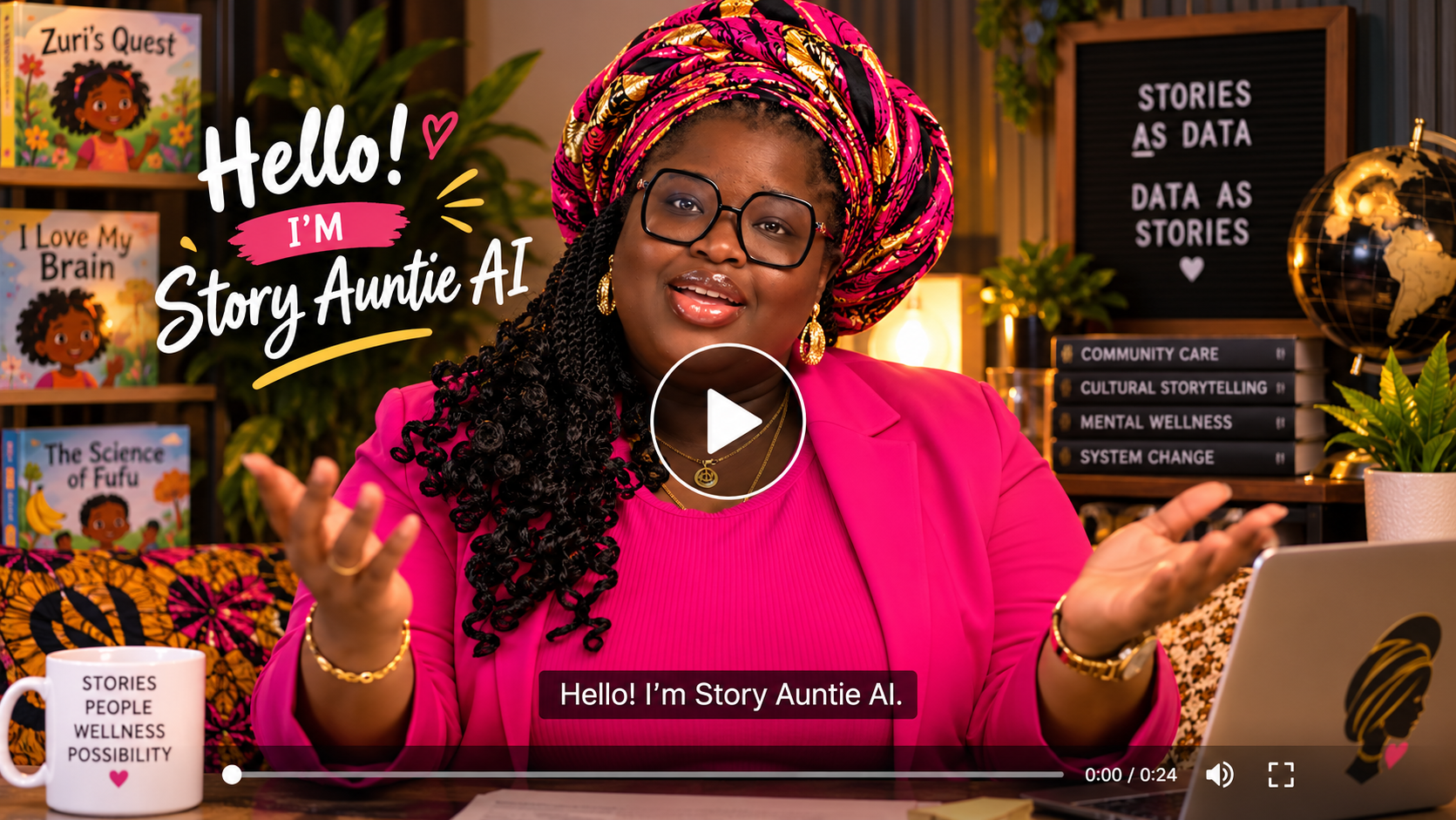
I am here to listen to a story, reflect what I notice, and stay curious about what I cannot know.
“Since my mother died, everybody keeps telling me I am strong. In my family, you don't carry everything outside. So I get up, go to work, laugh with everybody and come home. Sometimes when I park outside my house, I sit in the car for twenty minutes before going inside. That's the only place nobody needs anything from me.”
Reflective learning experience—not diagnosis, therapy, or clinical advice. Do not enter patient information, confidential records, or identifying details. Microphone transcription uses your browser when supported. Browser-generated speech is synthetic and may vary by device.
What would you have to ask before knowing?
“People sometimes think sitting in my car means I am falling apart.”
“It doesn't.”
“Those twenty minutes are the quietest part of my day.”
“I sit there, breathe, and prepare myself to go inside.”
“Some days, it is where I come back to myself.”
What must never be lost when we interpret someone else's story?
Loading the collective wall…
Your story can be heard, summarized and interpreted. None of those acts transfers ownership of its meaning.
Explore a future-facing question: could a reflective layer help distinguish a person's words from professional inference before an interpretation becomes documentation?
Every analytic step transforms the participant's account. The question is not whether researchers interpret—it is how interpretation remains visible, contestable and accountable.
Clinical language may help us recognize patterns. Data may help us see across populations. AI may help us organize information. Art may help us encounter what cannot easily be measured.
Yours should still be yours.